
Snowdrops
I have always seen snowdrops as a joyful sign that spring is on it's way, but this year I find that these snow-piercers are also laced with sorrow.

Joy and sorrow, life and death, hope and despair.
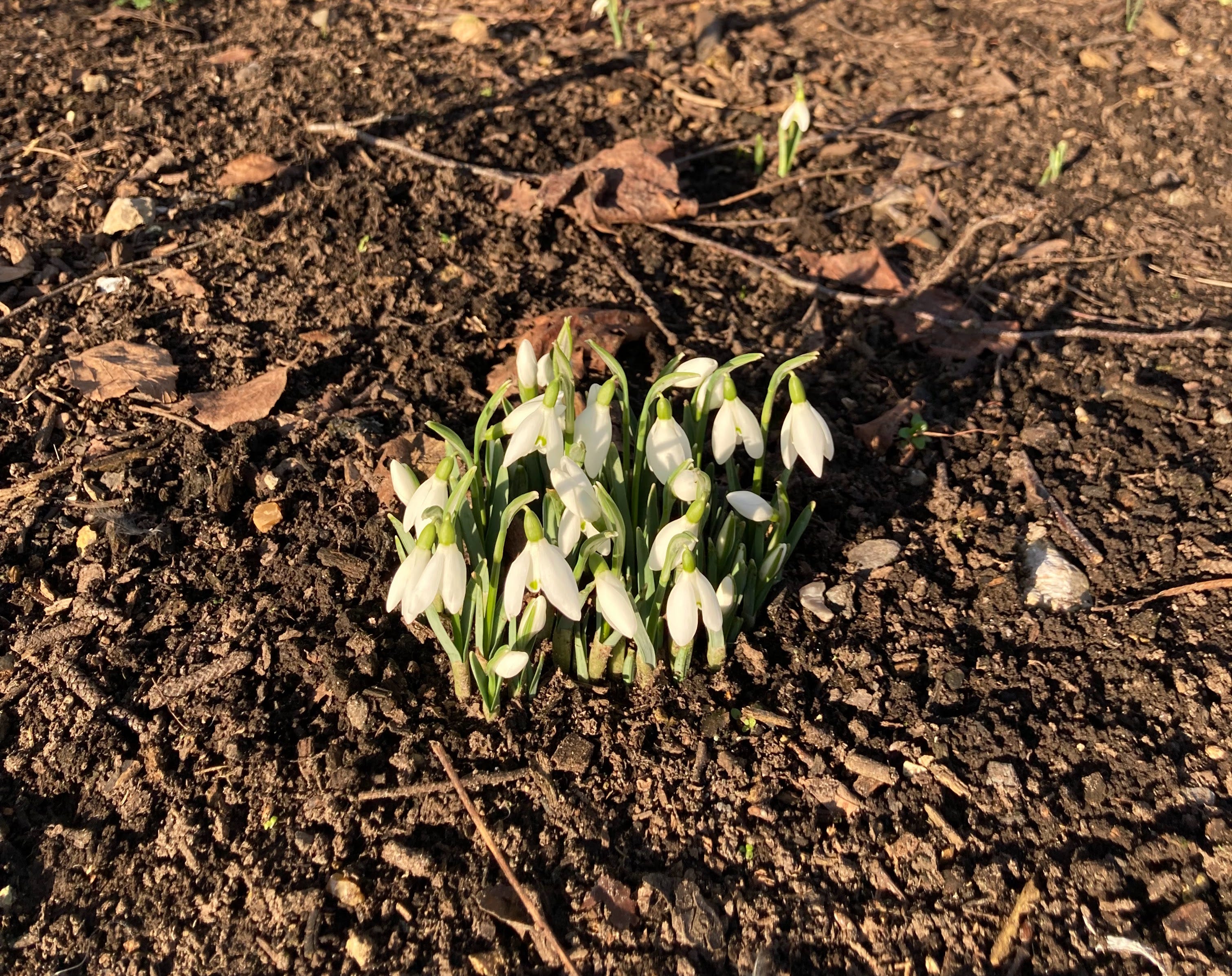
I spotted the first snowdrops, in my overgrown, muddy front garden a few weeks ago. We planted them 12 years ago when we moved into the house. We supplemented the original bulbs when we buried our beloved elderly cat and planted snowdrops over her grave. I don't know why I chose snowdrops to remember her, but it provided a gimmer of joy amidst the sorrow of her loss.
I went for a walk yesterday to seek out more snowdrops at Mottisfont, a local National Trust house. It was piercingly cold and raining. The rain stung my face. I started out with a hat and scarf but I always feel that they place a barrier between me and the world, so I pack my hat into my rucksack and continue bare headed. I stomp alongside the wide river Test, with views of the handsome house and gardens. Mallards speed past, riding the rapids of the fast flowing river. They are laughing maniacally today, as though high on the endorphin rush of this extreme sport. I am so schooled in the science of evolution, that I realise that I am sceptical that animals can just pursue an activity for the joy of it. Surely, it has to serve some purpose that will benefit the survival of the species? But how else can I experience these ducks' exuberant display other than as an expression of pure joy and exhilaration?
It isn't long before I spot a mound of white quivering bells. The nodding flowers shiver in the cold wind and icy rain taps their heads relentlessly. My heart lifts. I take an involuntary deep inhalation and sigh. I notice a small clump nestled in the roots of an oak by the edge of the path, and crouch down. The grey green slender leaves stand strong and erect topped by green and white swollen buds. Milky white lily, snow piercer, fairest of maids. The snowdrop is not native to Britain but was brought into the country in the 15th century as an ornamental plant. It is now widespread in the countryside, woodlands, gardens and churchyards. They are beloved as a harbinger of spring, a sign of the earth re-awakening after her slumbers of winter and a promise and hope of longer, lighter days and new life and growth in the coming weeks.
Last week, my daughters and I collected some snow drops and brought them into our house as part of Imbolc, a pagan celebration in which this burgeoning of life, the pregnancy of the earth is celebrated. We happily combined the traditions of Imbolc and the Christian Candlemass into a day's beeswax candle dipping, singing Waldorf songs and reading folkloric tales. We discovered a number of variations of sayings predicting the weather:
If Candlemas Day be bright and fair,
The half o winter's to come and mair
I smile bitterly at the accuracy of this prediction, as the rain falls more heavily and my fingers and toes numb in the bitter cold. Later, at home, when the girls are in bed I sit down with a glass of wine and a square of bitter chocolate and google snowdrops. I discover that this clear bell of a flower is not all I had thought. Of course, the clues had been there all along.
Snowdrops have been long held as symbols of hope and renewal, the pleasures that I had always felt when spotting them for the first time each new year, but also embedded in folklore and legend are darker and more foreboding connotations with death and superstition.
In some parts of Britain folk have long warned against bringing the first snowdrops into the house and anyone who ignores this advice must fear ill omens of death in the family or at the very least see their milk turn sour and the eggs spoil. Snowdrops are commonly planted in churchyards and on graves. Greek legend tells of Persephone bringing snowdrops with her as she returned each spring from the underworld. I feel the stirrings of fear and superstition. We brought some snowdrops into the house at Candlemas. I start to bargin, does it only count if it's the first flower? These were probably not the very first? I want snowdrops to bring the joy and hope I have always associated with snowdrops, not sadness and fear. I read on. Snowdrop bulbs are poisonous, and if mistaken for wild garlic bulbs, could indeed have caused illness or even death if eaten in any significant amounts. Is this where some of these superstitions have come from? Or is it simply inevitable that beauty and joy can never be extricated from their counterparts decay and sorrow.
My father died before Christmas. The last few years have been a place of gradual losses and bereavements, of sorrow and grief whilst life continues anyway with moments of joy and wonder. I have been aware of what seems to be a constant presence and balancing act of these seemingly contradictory states of being. Of course, these paradoxes have always been there. Even the pure and wondrous snowdrop has acted as a vessel in which we have poured our attempts to find meaning in these experiences. I am noticing a mere breath of the sorrows that the world holds in her hands and the experiences that others have gone through.
Joy and sorrow, life and death, hope and despair.
I continue my icy walk along the riverbank, past the rotting leaves and fallen sycamore and listen to the hopeful calls of the mallards displaying their swimming prowess to their mates. A bumblebee flies in front of me, buffeted by the wind, impossibly hopeful of finding nectar on a day like this. A blackbird sits at the top of a bare silver-birch and sings his heart out simply for the joy of living.